Swiss FTD Network: Advancing Interdisciplinary Exchange on Frontotemporal Dementia
Frontotemporal dementia (FTD) presents unique diagnostic challenges for neurologists, psychiatrists, and geriatric specialists. In this interview, Prof. Marc Sollberger, founder of the Swiss FTD Network, explains how the network brings together experts in

The origins of the Swiss FTD Network in Switzerland
Flavia: What was your motivation for founding the FTD Network?
Marc: The basic idea was to create a space for exchange. I run the network entirely on my own, and it emerged from the need to connect professionals working with the broad spectrum of frontotemporal dementia. On a national level, there was no comparable offering. There are individual events and international FTD meetings, but no national platform that enables this interdisciplinary exchange. That’s the gap we wanted to fill. There is also no nation FTD-specific professional society in Switzerland.
Marc emphasizes that the network was entirely self-initiated, emerging from a practical need rather than institutional funding or sponsorship. This bottom-up approach allows members to shape the discussions and prioritize topics relevant to their daily practice.
How the Swiss FTD Network facilitates interdisciplinary exchange
Flavia: Can you explain how the network functions and how do you communicate?
Marc: Unlike traditional webinars where topics are predetermined, members of our network suggest cases, projects, or research topics. In plenary sessions, we decide collectively which subjects will be addressed next. The network meets virtually every six months for 1.5 hours. Between meetings, slides, papers, and updates are shared via email, so even members who rarely attend still benefit from the discussions.
This flexible approach ensures that the network remains dynamic, inclusive, and focused on real-world needs. Members are encouraged to actively contribute, but even passive participants gain insights and educational value.
Flavia: Can you tell us a bit more about the network and the topics covered?
Marc: The network is special because it differs from traditional webinars. In webinars, I usually set the topics myself. Here, members decide which subjects are discussed. We cover a broad spectrum of diseases — from frontotemporal dementia to language and behavioral disorders, ALS, Parkinson’s syndromes, and other rare neurodegenerative diseases. All professionals, medical and non-medical, have the chance to exchange ideas. Unlike classic congresses, where a scientific board sets topics and selects speakers, our network works bottom-up: participants propose topics, present cases or projects, and in the plenary, we decide what will be discussed next. Young colleagues can ask questions or present cases without hierarchy being a barrier. If no one makes suggestions, I choose the topics, but that is rather rare.
Who participates in the Swiss FTD Network and which disciplines are represented
Flavia: Who is the network particularly suitable for?
Marc: We also emphasize national networking and interdisciplinarity. Members come from neurology, geriatrics, old-age psychiatry, neuroradiology, social work, and even abroad. English is the common language to be accessible to everyone, though smaller meetings may be in German, French, or Italian.
Currently, the network includes around 60–70 members. The structure is well-balanced: neurologists, neuropsychologists, social workers, old-age psychiatrists, geriatricians, etc. Its success relies not on formal advertising, but on word-of-mouth within professional circles, making it a recognized and established community in Switzerland.
Challenges in diagnosing frontotemporal dementia
Flavia: Can you briefly explain why this exchange is so important and why early diagnosis of FTD is so difficult?
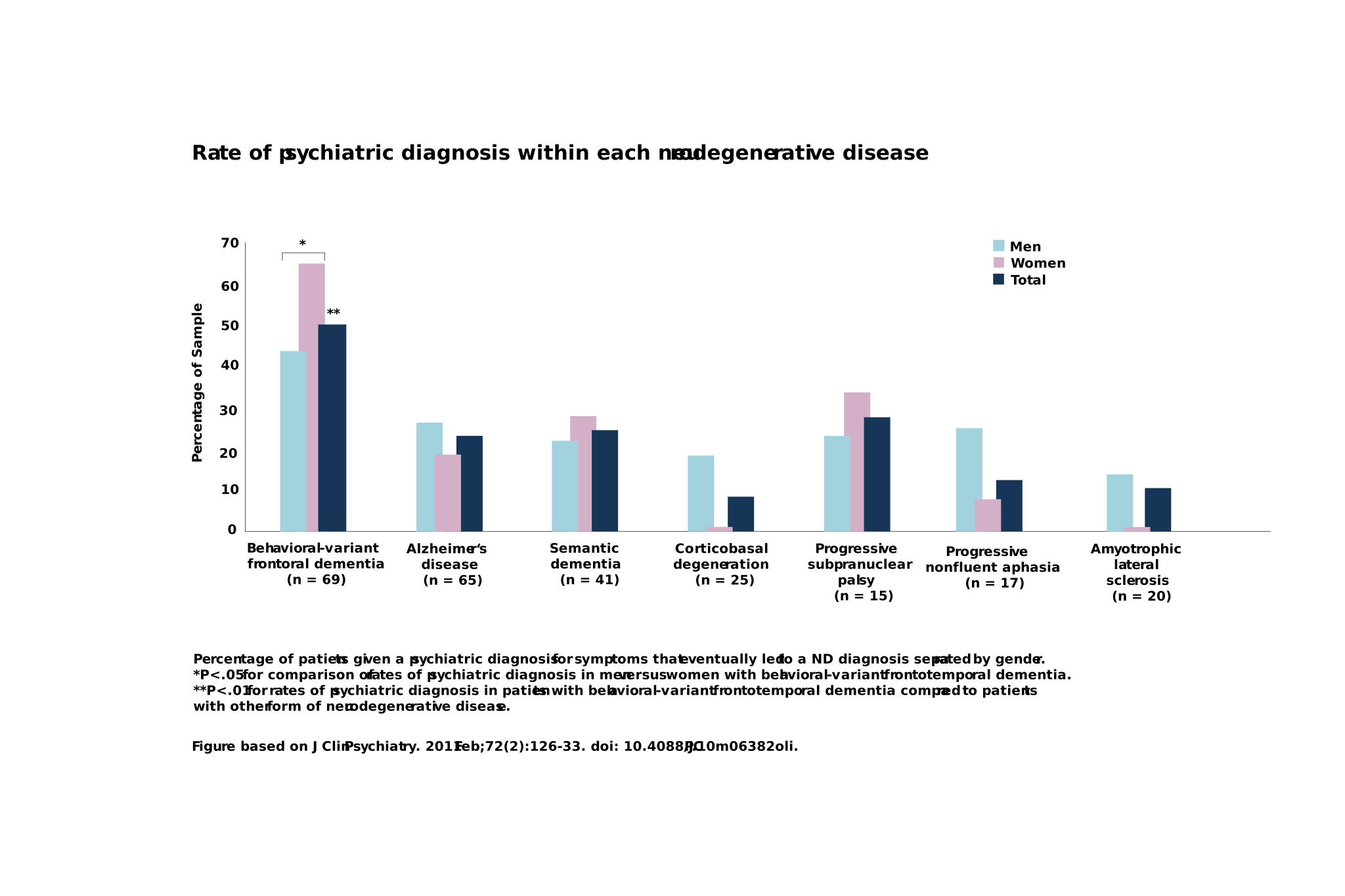
Marc: FTD syndromes include a broad spectrum of related disorders. The main distinction is between the language variant and the behavioral variant, the latter being more common. One of the biggest challenges is that early stages are often misinterpreted as psychiatric disorders or vice versa. FTD is rare, and knowledge among physicians is limited, which increases the risk of misdiagnosis. FTD lies at the interface of psychiatry and neurology, so interdisciplinary collaboration is crucial. It often occurs relatively early in life, frequently in working-age adults. Behavioral changes are more likely attributed to depression, burnout, or other psychiatric causes. In contrast to Alzheimer’s disease, there are no reliable biomarkers for a clear diagnosis.
Additional challenges include:
- Early onset: FTD often affects working-age adults, so symptoms like behavioral changes may be attributed to burnout or depression.
- Lack of biomarkers: Unlike Alzheimer’s disease, there are no reliable biomarkers to confirm diagnosis early.
- Interdisciplinary complexity: FTD sits at the intersection of psychiatry and neurology, making collaboration between specialists essential.
Why interdisciplinary exchange is crucial for FTD diagnosis and care
Marc: Interdisciplinary exchange is key because early and accurate diagnosis requires insights from both neurology and psychiatry. Through case discussions, members can share experiences and learn from one another. This reduces the risk of misdiagnoses and ensures that patients receive appropriate care. Correct diagnosis is critical—not only for clinical management, but also for prognosis and supporting families.
By fostering exchangecollaboration, the network helps professionals navigate the complexities of FTD while simultaneously promoting educational and research opportunities.
The long-term goal of the network
Flavia: What are your long-term objectives for the network?
Marc: Our goals extend beyond knowledge sharing. The network also supports research initiatives, including observational and multicenter studies. Small centers, which might otherwise be overlooked in large congresses, can present projects and engage participants. Over time, we aim to enhance understanding of FTD, improve diagnosis and patient care, and strengthen interdisciplinary collaboration across Switzerland.
The network thus serves a dual role: it is both an educational platform and a facilitator for scientific advancement, enabling a broad range of professionals to contribute to research and clinical best practices.
Key Takeaways
- The Swiss FTD Network fills a national gap for interdisciplinary exchange on frontotemporal dementia.
- Members actively shape the topics, ensuring discussions remain clinically relevant.
- Interdisciplinary collaboration improves early diagnosis and reduces misinterpretation of behavioral or psychiatric symptoms.
- The network supports research initiatives, particularly for small or emerging centers.
- Knowledge sharing ultimately benefits both patients and families by promoting accurate diagnosis and informed care strategies.
Professionals interested in FTD are invited to join the Swiss FTD Network to access virtual meetings, case discussions, and research collaborations. By participating, members contribute to a stronger, more informed community addressing the challenges of frontotemporal dementia in Switzerland and beyond.